6 Things Mums Ask Us About Formula
In partnership with Kabrita
I’ve breastfed all three of my children, and I’m incredibly grateful for that journey. But feeding three babies also taught me very quickly that things don’t always go exactly to plan.

Juliane breastfeeding her third baby, Lou.
Formula became part of our story with Zoé when my milk supply dropped during my pregnancy with Clémentine, and later with Clemy at nursery when I simply didn’t have the energy to pump.
And to me, that’s real motherhood.
Sometimes you breastfeed. Sometimes you combination feed. Sometimes formula gives you the flexibility you need. And none of those choices need to come with guilt.
Over the years at Mama Tribe, mums have asked us the same questions again and again:
Which formula should I choose? What should I look for? What are the different options?
So when we discovered Kabrita, I was genuinely curious to learn more about goat-milk formula and what makes it different.
Here are six of the questions we hear most.
1. Why are mums talking about goat-milk formula?
There are more feeding options available to families today, and goat-milk formula is one that more mums are becoming curious about.
Kabrita is made in the Netherlands using whole goat milk and naturally A2 goat-milk protein.
For me, the important thing isn’t saying that one type of formula is right for every baby. It’s knowing what the options are, understanding what’s in them, and then choosing what works for your family.
2. What exactly is A2 protein?
You’ll see A2 protein mentioned quite a lot when reading about goat milk.
Kabrita naturally contains A2 goat-milk protein and also uses whole goat-milk fat in its formula.
And if you’ve ever stood in front of a formula shelf trying to decode every ingredient while holding a tired baby, you’ll understand why we think making this information simpler really matters.
3. Why is everyone suddenly talking about gut health?
Because a baby’s gut microbiome develops rapidly during the early years, and it’s something many parents are becoming much more aware of.
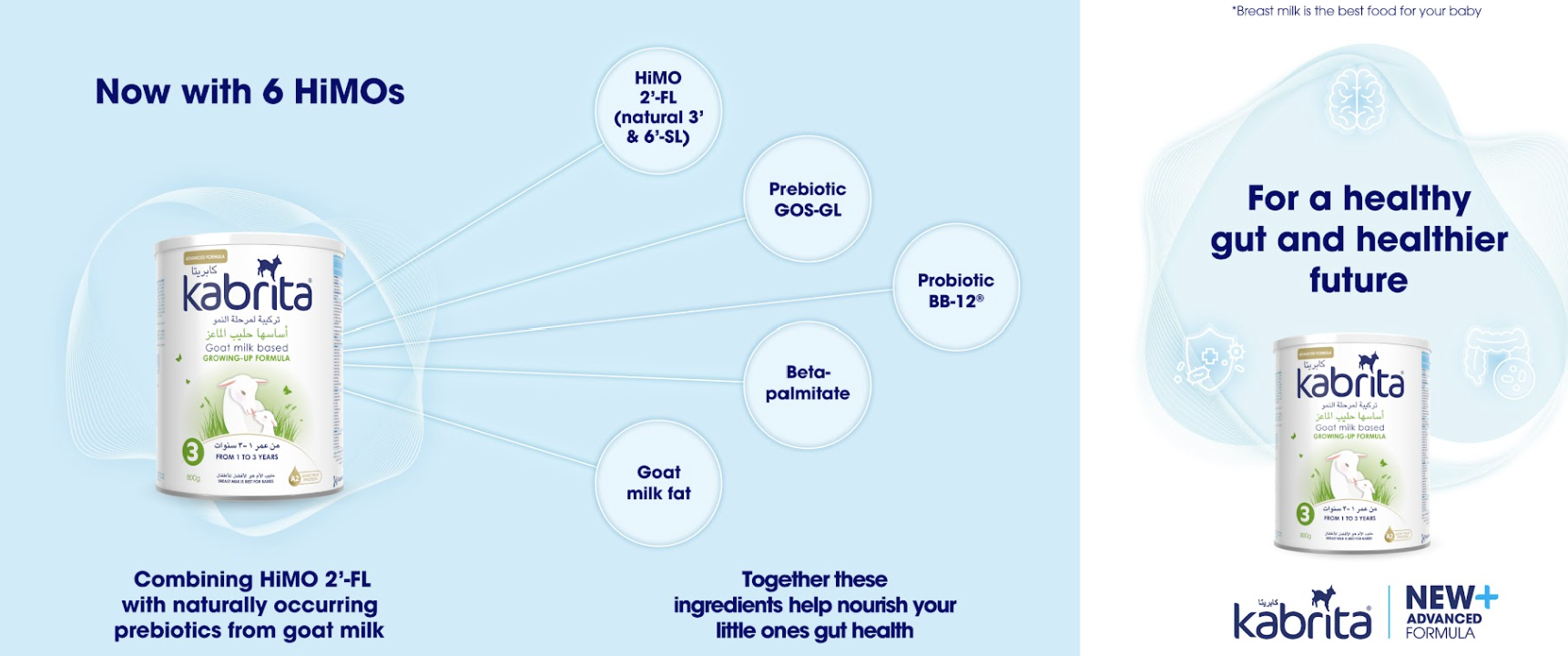
Kabrita’s latest formula was developed with gut health in mind and combines 6 HiMOs, GOS prebiotics and the BB-12 probiotic.
They sound like complicated words, but essentially they’re ingredients included to support the beneficial bacteria living in the gut.
4. What else should I look for on the label?
This is one question I think mums should ask more often.
Rather than only looking at the brand on the front of the tin, look at what is actually inside.
Kabrita’s formula includes plant-based DHA and ARA alongside its goat-milk ingredients.
It’s also made without palm oil or soy and is non-GMO.
The point isn’t to become an expert in formula ingredients overnight. It’s simply to feel a little more informed about what you’re choosing.
5. Can formula still be part of a breastfeeding journey?
Absolutely.
It was for me.
Using formula with Zoé didn’t mean our breastfeeding journey ended. And giving Clemy formula at nursery meant I didn’t have to put myself under pressure to pump when I simply didn’t have the energy.
Every feeding journey looks different.
You might exclusively breastfeed, exclusively formula feed, combination feed, introduce formula when you return to work, or simply decide that sharing feeds works better for your family.
There is no medal for doing motherhood the hardest possible way.
6. So, is goat-milk formula right for my baby?
Maybe. Maybe not.
And that’s exactly why we prefer giving mums information rather than pretending there is one perfect answer.
What I like about Kabrita is that it gives families another well-considered option to know about.
Because whether your journey is breastfeeding, combination feeding, formula, weaning, or a little bit of everything, what matters is finding something that works for your baby and your family.
No guilt. No judgement. Just more information and more choice. 💛
A note from us: Breastfeeding is best for your baby. If you’re considering introducing or changing formula, speak to your healthcare professional, particularly if you suspect an allergy. Goat-milk formula is not an alternative for a diagnosed cow’s-milk protein allergy.