Montessori at Home: Nurturing Independence and Joyful Learning
At Mama Tribe, we love sharing what truly supports families beyond the meet-ups and conversations. Today’s article is especially close to our hearts, because Montessori is something many of us explore at home with our own children. Over the years, it’s also been a topic that comes up often within our community: how do we actually apply Montessori in real family life, without turning our homes into classrooms? I had multiple conversations about the subject with Madeleine Green, Nursery Director of Children’s House Montessori (Shakhbout City Branch) and she generously offered her expertise and practical guidance.
Madeleine Greene is an MCI Montessori‑trained Early Years specialist with a BA (Hons) in Early Childhood Studies and the NPQ in Early Years Leadership, with experience in reputable nurseries in both the UK and Abu Dhabi. Since joining CHM in 2016 as Nursery Director, she now leads the organisation’s expansion into its new branches in Shakhbout City and ADLC.
Together, we hope to show that Montessori isn’t about perfection, it’s about intention, trust, and nurturing independence in ways that feel natural, achievable, and joyful for everyday family life.
“At CHM, we take pride in being a Montessori nursery that offers a nurturing, child-centered environment where independence, curiosity, and a lifelong love of learning are at the heart of everything we do. Our approach is rooted in hands-on activities and thoughtfully prepared spaces that encourage children to develop critical thinking, self-discipline, and social skills at their own pace.
The Montessori philosophy places great emphasis on respecting each child’s unique developmental journey. By fostering confidence and creativity, we help lay a strong foundation for future academic and personal growth, both inside and outside the classroom. One of the most beautiful aspects of Montessori education is its adaptability. You don’t need a classroom to embrace its principles; many of them can be seamlessly integrated into your home environment. Whether you’re looking to support your child’s independence or create a more purposeful play space, small changes can make a big difference.
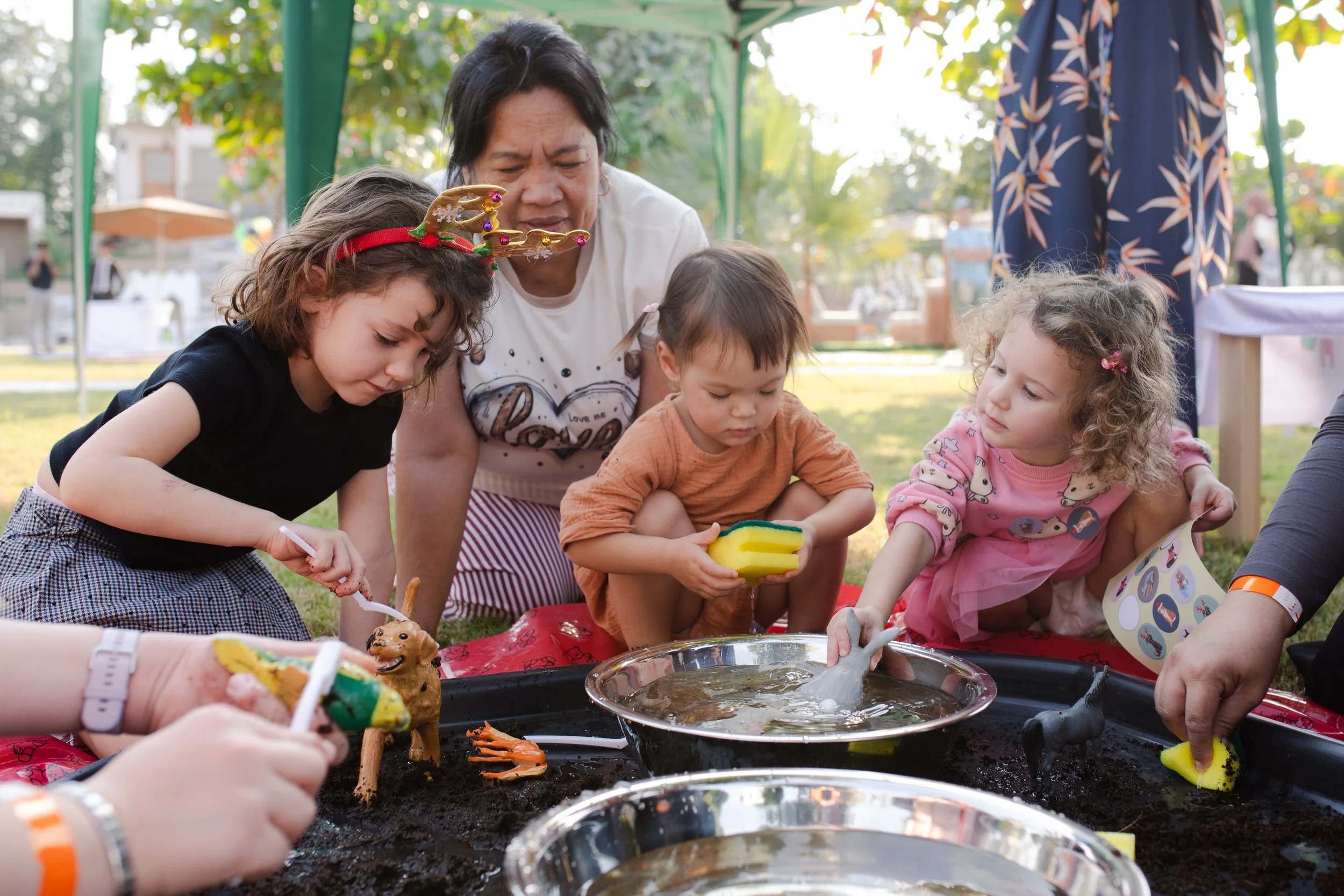
Children’s House Montessori set-up : Children engaging in outdoor, child-led play during our Family Day in November 2025.
Here are some practical tips to bring Montessori into your home:
CORE MONTESSORI PRINCIPLES
• Respect for the child: Value your child’s choices and pace
• Independence: Encourage self-care and decision-making
• Hands-on learning: Use real-life tasks and tactile materials
• Order and simplicity: Create calm, organised spaces
• Freedom within limits: Offer choices within clear boundaries
SETTING UP A MONTESSORI-FRIENDLY HOME
1. Child-Centered Spaces
Design areas that are accessible and inviting:
• Low shelves for toys and books
• Child-sized furniture and tools
• Hooks and step stools to promote independence
2. Simplify and Rotate Toys
Avoid clutter by offering a few open-ended toys made of natural materials. Rotate them weekly to keep your child engaged.
3. Encourage Practical Life Skills
Involve your child in daily routines:
• Cooking: Let them wash, whisk, mix and pour
• Cleaning: Provide child-sized tools
• Dressing: Use easy-to-manage clothing, such as Velcro and large buttons
These tasks build confidence and fine motor skills.
EVERYDAY LEARNING OPPORTUNITIES
Learning the Montessori way happens naturally:
• Sort laundry by colour or size
• Match socks or utensils
• Count fruits and vegetables while shopping
• Explore nature during walks and collect treasures such as pebbles and shells.
Follow your child’s interests and let them take the lead.
CREATE SIMPLE LEARNING ZONES
Set up purposeful areas:
• Reading nook: A cozy corner with a few books
• Art station: Crayons, paint, paper and scissors
• Nature shelf: Display leaves, stones and/or shells or other beautiful items found during nature walks
• Sensorial area: Materials that engage touch, sound, smell, taste and sight
SUPPORT INDEPENDENCE
Let your child make choices:
• Offer two outfit options
• Ask open-ended questions
• Allow time for problem-solving before stepping in
By incorporating these simple practices, you can create a home that supports your child’s growth, curiosity, and confidence - just as we do at CHM every day.”
Montessori is not about doing more, but about doing things with intention,trusting our children, slowing down, and creating environments where they feel capable and confident. We hope these tips inspire you to bring small, meaningful changes into your home, knowing that even the simplest adjustments can have a lasting impact on your child’s sense of independence and joy in learning.
If you’d like to explore Montessori education further or learn more about how Children’s House Montessori supports children and families in Abu Dhabi, you can get in touch with their team directly on WhatsApp at +971 56 471 2900, or visit their website at thechildrenshousemontessori.com. They’ll be happy to guide you and answer any questions you may have.